
Colorado Resident Lookup Records
Colorado has no master resident file. County assessors and Clerks & Recorders hold parcel and deed records; state systems cover courts, voter registration, and vital records. Each answers a narrow question. An owner or tax-mailing address does not establish who lives at a Colorado property.
| Record | What It Confirms | Where | Access |
|---|---|---|---|
| Colorado assessor parcel | Owner of record, situs, mailing address, legal description | Colorado county assessor; state parcel layer | Portal, map, counter, or phone; occupancy is not confirmed |
| Colorado recorded deed | Grantor, grantee, recording date, legal description | Colorado county Clerk & Recorder | Index and images vary; older books may require an office search |
| Colorado court docket | Case number, party role, court, date, public events | Colorado Judicial Branch or filing court | Online docket; request documents from the clerk |
| Colorado voter record | Public registration fields and election history | County clerk or Secretary of State | Individual self-service or a lawful records request; some fields are confidential |
| Colorado vital record | Birth, death, marriage, or divorce event | CDPHE, issuing county, court, or archive | Indexes vary; certified copies require eligibility |
| Colorado probate file | Estate role, fiduciary, and public filings | District or probate court | Docket and clerk channels; sealed portions stay restricted |
| Colorado historical entry | Past address, household, school, or obituary link | Denver Public Library and archives | Digitized items, library help, or archive request |
Let the known fact set the first search: use an address to locate its county assessor, an event to identify CDPHE or the filing court, and a case clue to query the docket. Log the source, date, county, and record role so the right custodian can resolve a conflict.
Build a Two-Record Colorado Match
A shared name is not enough. Colorado results can refer to people with the same first and last names, and a person may appear under a middle initial, earlier surname, trust, or business role. Add a county or time period, then test a second detail such as an address, case number, family relation, or dated directory entry.
- Record the full name, likely Colorado county, spelling variants, and middle initial.
- Check the Colorado county assessor; save the parcel ID and legal description. Mailing data is not proof of residence.
- Use only Colorado's lawful public voter fields; protected records and confidential details are withheld.
- Search the Colorado docket by county and date, then compare the party role and court.
- For Colorado family research, confirm with an eligible vital record, probate file, or dated source. Ask for the document if an index is unclear.
Stop when dates, counties, or roles conflict. A docket party, business agent, owner, and resident are not the same role.
- Docket
- A Colorado court's dated case list, which may show parties and events but is not the full case file.
- Index and image
- An index is a searchable Colorado record entry; an image is a scan of the filed or recorded document. Some counties charge for images or copies.
- Certified copy
- A Colorado custodian authenticates this copy for formal use. A portal printout is not automatically certified.
Colorado Court Docket Search Fields
The Colorado Judicial Branch Docket Search finds Colorado district and county court events by date. It requires a date range plus another filter, such as location, case number, party, business, or attorney. Options vary by court, so start with the county and a fitting date range.
The Colorado Docket Search lists filters for party, case, location, and attorney searches.
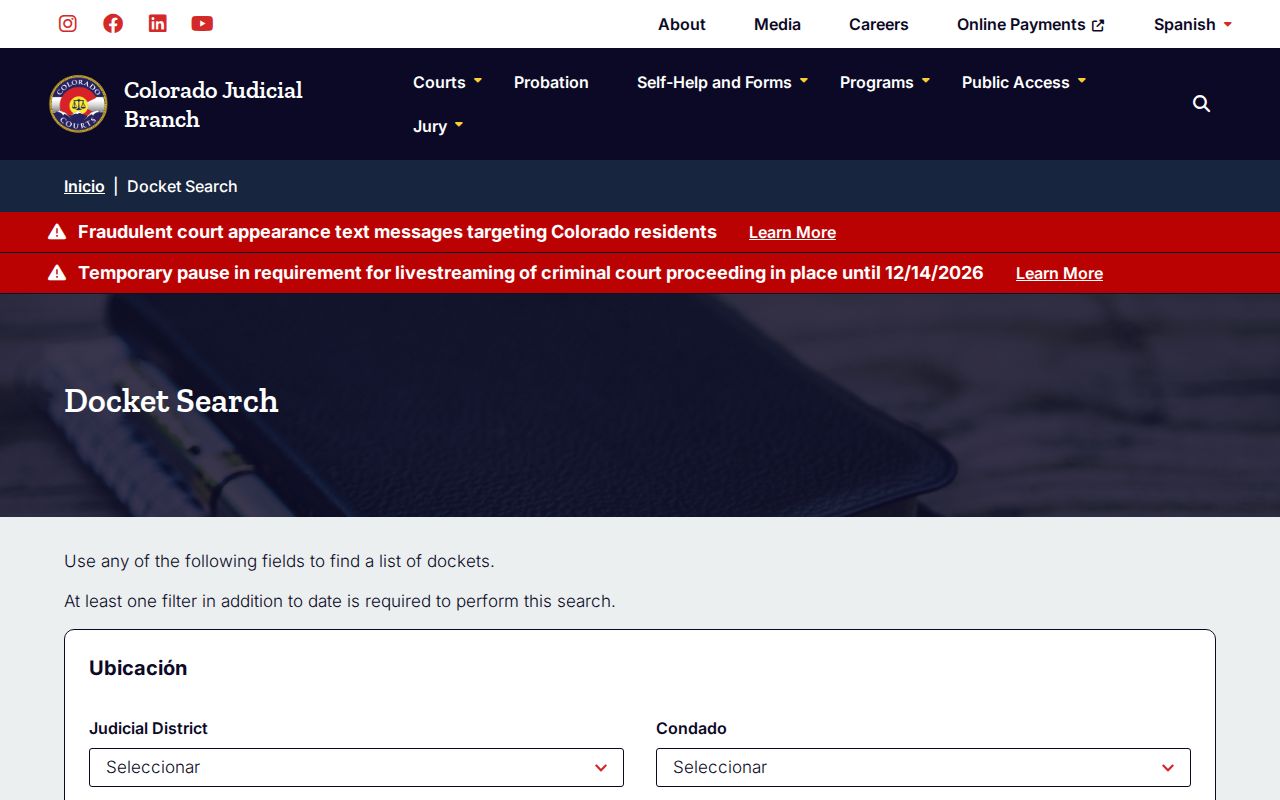
Pair date and location before adding a name. A docket hit is a lead to check with the Colorado filing court, not identity proof.
| Field | Type | Required | Colorado search note |
|---|---|---|---|
| Location | Section or select | No | District, county, or courthouse. |
| Court Type | Dropdown | No | Options vary by court. |
| Division | Text | No | Division code or name. |
| Date Range | Select or date | Yes, with another filter | Include the likely event. |
| Specify A Date | Date | No | Single docket date. |
| Case Number - 4-Digit Year | Text | No | Four-digit filing year segment. |
| Case Class | Dropdown | No | Choose the case class when known. |
| Case Sequence | Text | No | Sequence segment within the class. |
| Party search for | Radio | No | Individual or business. |
| First / Last Name | Text | No | Party name fields. |
| Business Name | Text | No | For a business party. |
| Attorney search for | Radio | No | Name or bar number. |
| Attorney Bar Number | Text | No | Bar number, if known. |
| Attorney First / Last Name | Text | No | Attorney name fields. |
| Search | Button | Yes | Requires date plus another filter. |
What a Colorado Docket Entry Shows
A docket result may show court, location, case number and class, filing date, party and role, attorney, and public event or disposition lines. The captured result screen was unavailable, so use these details as a case-identification checklist. Sealed, juvenile, adoption, and expunged matters may not appear.
| Record detail | Why it helps verify a match |
|---|---|
| Colorado court, courthouse, judicial district | Shows which custodian holds the file. |
| Colorado case number, class, filing date | Separates similarly named cases and gives a retrieval key. |
| Colorado party name and role | Shows whether the person is listed as an individual or business party. |
| Colorado individual or business indicator | Clarifies which type of party search produced the result. |
| Colorado attorney name or bar number | Provides a second case detail when the result is ambiguous. |
| Colorado event or disposition line | Summarizes a public docket event; request the official file to confirm details. |
Limited online register-of-actions access does not provide document copies. Ask the filing court by records request, counter, phone, mail, or email. A case number helps the clerk locate the official file; sealed records remain unavailable.
Colorado Voter Lookup Has Boundaries
Go Vote Colorado lets an individual register, find or update their own record, check ballot status, and contact a county clerk. It is not an unrestricted public name-and-address search. Public voter fields can include name, residential and mailing address, birth year, party, vote history, active status, and military/overseas designation; month/day of birth, ID numbers, SSN fragments, signature, and email are confidential. Colorado voter status can lag a move, and protected voters may have more withholding. A public-file request goes to the county or Secretary of State under C.R.S. §1-2-227; SCORE access is restricted to designated election officials.
The Go Vote Colorado registration page shows its individual search and ballot-status routes.
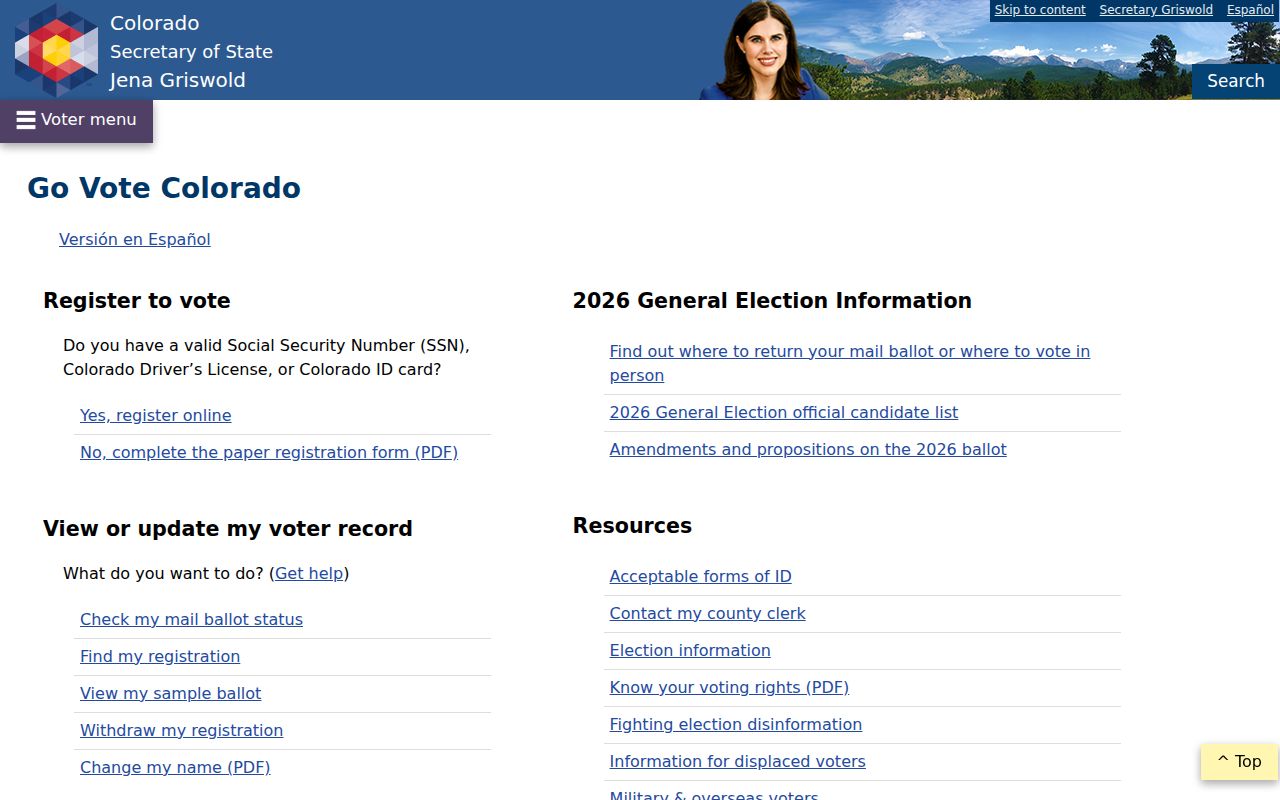
Voters use these controls for their own record; confidential fields remain hidden. For older Colorado election records, ask the county clerk, State Archives, or local library about poll books and returns. Denver also publishes historical registration, turnout, and precinct information. A narrow CORA request can seek a public dataset; no statewide online poll-book index was found.
Colorado Vital Records Need Direct Interest
Colorado vital statistics are confidential. C.R.S. §25-2-117 requires direct and tangible interest, identity proof, and eligibility for certified copies. A Colorado index or newspaper notice can suggest an event, but not open a current certificate. State birth records generally begin in 1910 and death records in 1900; older county holdings vary. CDPHE Vital Records is at 4300 Cherry Creek Drive South, HSVRD-VS-A1, Denver, CO 80246; phone 303-692-2200. Requests can be online, by mail, fax, or in person. County offices use COVIS; marriage copies come from the issuing county, and divorce decrees from the granting district court.
The CDPHE order page routes applicants to the right certificate and request path.
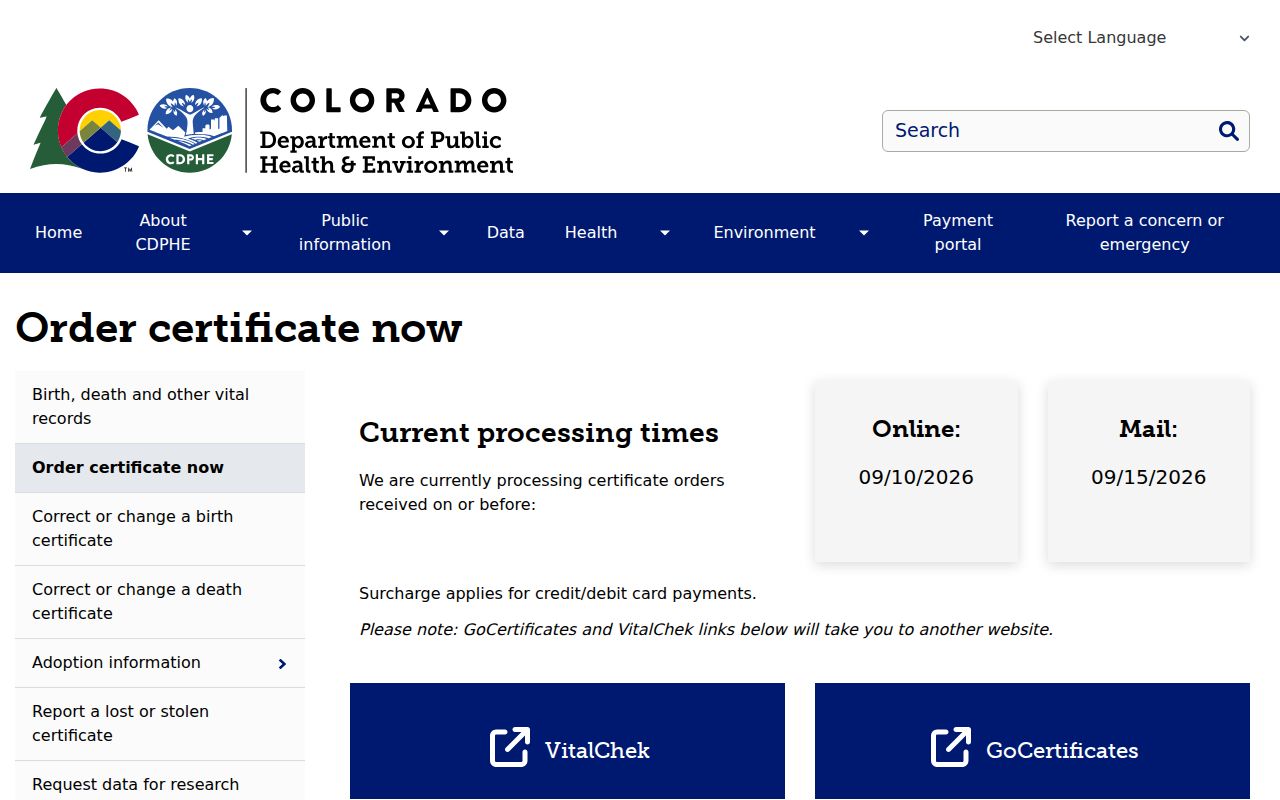
For historic work, the Colorado State Archives permits birth research only for records at least 100 years old. Its birth-record guide explains the route; older county books and newspaper indexes can fill gaps, but do not open recent certificates.
Colorado Residents in Heir and Classmate Records
For a Colorado heir search, use an obituary or death index, then search the probate docket by the decedent's name. Public filings may name heirs or a fiduciary; addresses can be old and some details sealed. Ask the clerk for the public file.
Birth-parent searches use Colorado's authorized adoption registry or confidential-intermediary route, not an open name search. A yearbook or alumni notice can help reconnect with a classmate, but proves only a dated school link.
Denver Public Library's Colorado collections include city and householder directories, yearbooks, newspapers, maps, census material, and genealogy tools. Its directory guide lists online and in-person routes; keep the year attached to each entry.
Colorado Registry Records Have a Narrow Scope
The Colorado CBI sex-offender registry has a specific statutory scope and misuse warning. Its information page is one example of a limited public registry, not a list of Colorado residents.
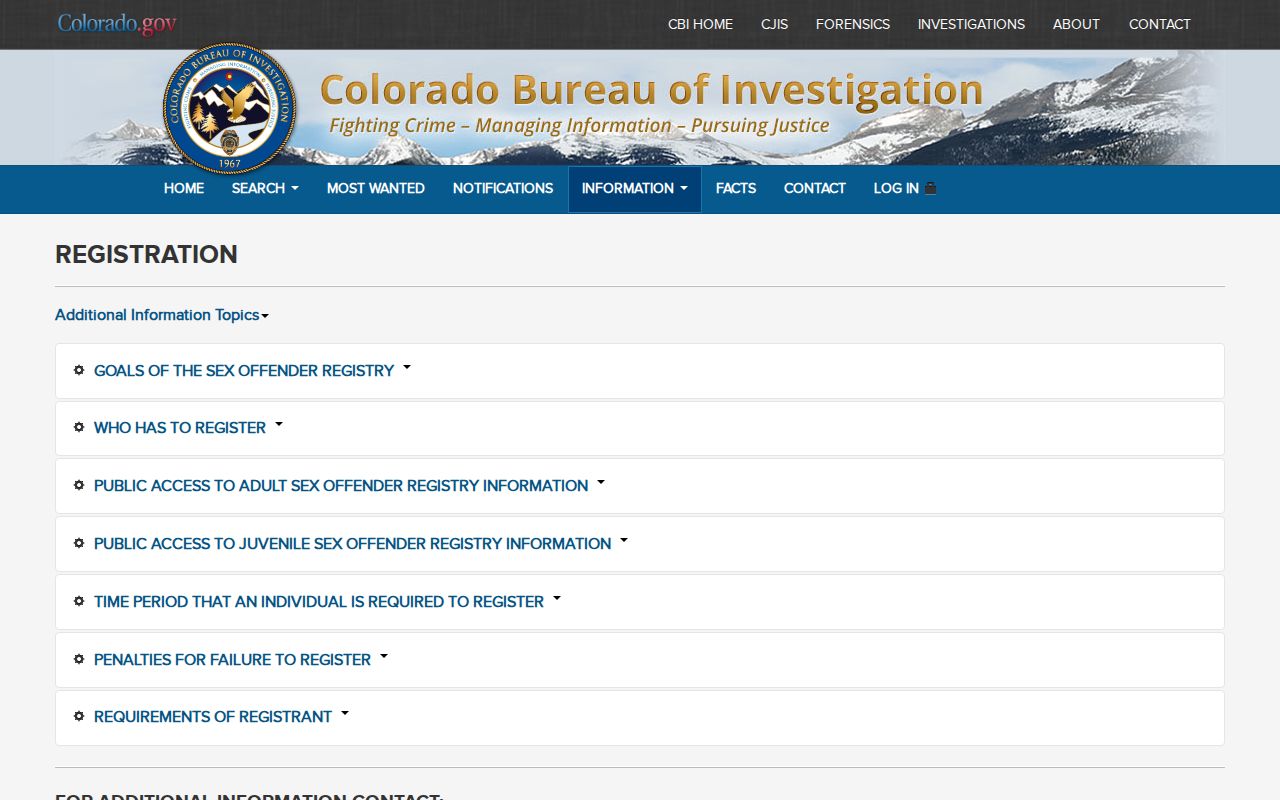
Use the registry only for the categories and purposes set by its rules; a result does not establish a broader identity or residence match.
Colorado's 1859 Denver Deed Trail
One number is local, not statewide: Denver's recorded-document index reaches 1859. It can link a name to an instrument, legal description, and recording date. Colorado has no deed index for all 64 counties, so a Denver result cannot stand in for a parcel elsewhere.
The Denver Clerk & Recorder's CountyFusion index is one Colorado county route. Others set their own cutoffs and image rules. A deed shows a recorded transaction, not that the grantee lived there.
If an address fails, search by parcel or legal description. Keep the parties, deed type, and date together so a lien or release is not mistaken for a transfer.
Colorado Records Requests Have a Fallback Route
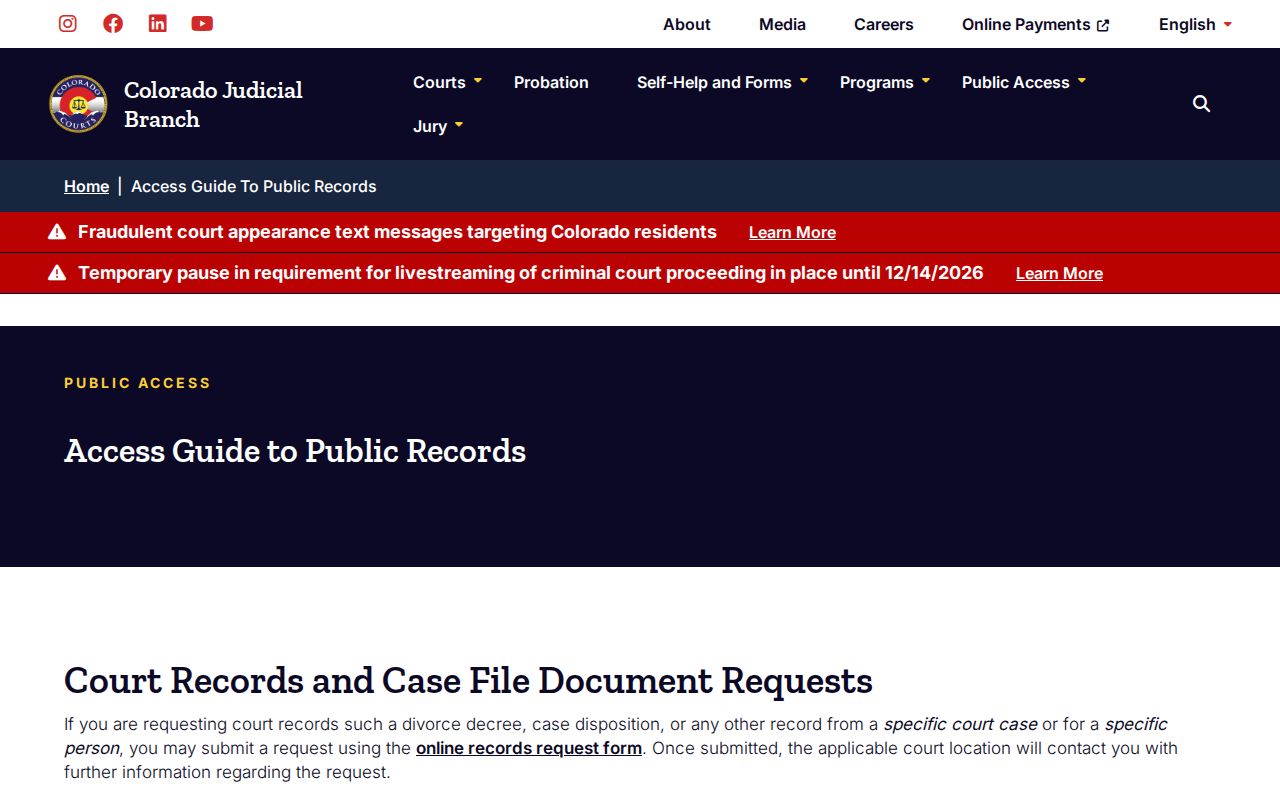
A blank Colorado court search is not the end. Use the court access guide and request form, or contact the filing clerk. The route varies by court; a clerk can explain archived-file retrieval and copy or certification costs.
For Colorado agencies, name the existing record, custodian, county, date range, and format under CORA. The state CORA page explains the framework. Responses are generally due within three working days, with up to seven extra for an exception. Common charges include 25 cents per page after 25 pages and up to $41.37 an hour after the first research hour.
The court access guide explains the request route and directs readers to the filing court for official and older files.
The Colorado State Archives takes historic requests online, by phone, mail, or in person at 1313 Sherman Street in Denver; its desk is 303-866-2358. Library help and microfilm fill some index gaps.
Colorado Resident Lookup Privacy Limits
Colorado's Address Confidentiality Program gives eligible people a substitute address and mail forwarding after relocation from domestic violence, sexual offense, human trafficking, or stalking, and covers protected health-care workers. C.R.S. §§24-30-2101 to 2114 limits disclosure of a participant's actual address. Do not use neighboring records to infer a protected address. The program's official information page explains its route.
The Colorado Privacy Act gives covered consumers access, correction, deletion, portability, and opt-out rights for certain personal data, while information made public in a government record is generally excluded. A person can use a commercial listing provider's own removal channel for information it controls. A public county deed or assessor record is handled through its custodian's correction or redaction process.
Lawful personal use. Public records support family research, civic understanding, and careful identity checks. Do not use these records to follow, pressure, expose, or harass someone; repeated unwanted contact or surveillance can cross Colorado's anti-stalking law.